How Do I Keep Working Out When My Schedule Is Never the Same Twice?
Your week never looks the same twice, and rigid workout plans keep failing. Here's the flexible system that keeps you training through any chaos.

As an Amazon Associate I earn from qualifying purchases.
Some people have the luxury of "leg day is Tuesday." You don't. Shift work, unpredictable meetings, kids' schedules, travel — your week never looks the same twice, and every fitness plan you've tried assumes a routine you don't have. The problem was never your discipline. It was that you were handed the wrong kind of plan.
Quick Answer
Stop scheduling workouts by day and start attaching them to anchors that move with you: "after I drop the kids," "before my first meeting," "the moment I get home." Keep a menu of 3 workout lengths (10, 20, 40 minutes) and pick based on the day you actually got, not the one you planned. Consistency for an unpredictable life comes from flexibility built into the system, not from forcing a rigid routine onto chaos.
Why Fixed Schedules Fail Unpredictable People
A "Mon/Wed/Fri at 6 PM" plan works great — until Wednesday explodes. You miss it, then Friday, and by the next week the plan feels broken, so you quit. The plan didn't fail because you're undisciplined; it failed because it had zero tolerance for a normal chaotic week. Rigid plans need rigid lives. Yours isn't one, and pretending otherwise just sets up the next quit.
The System That Actually Survives Chaos
Anchor to events, not clock times. "I work out at 6 PM" dies the moment 6 PM gets hijacked. "I work out right after I get home, whenever that is" survives, because the trigger moves with your day. Pick a daily event that almost always happens and bolt the workout to it.
Build a 3-tier menu. Decide in advance what each kind of day gets:
- Chaos day (10 min): one round of squats, push-ups, plank, done in the living room. A workout mat and floor space is all it takes.
- Normal day (20 min): a full circuit or brisk walk plus strength.
- Good day (40 min): the "real" session you actually enjoy.
The trick: on a bad day you don't skip — you drop a tier. Ten minutes keeps the streak alive, and the streak is the whole game.
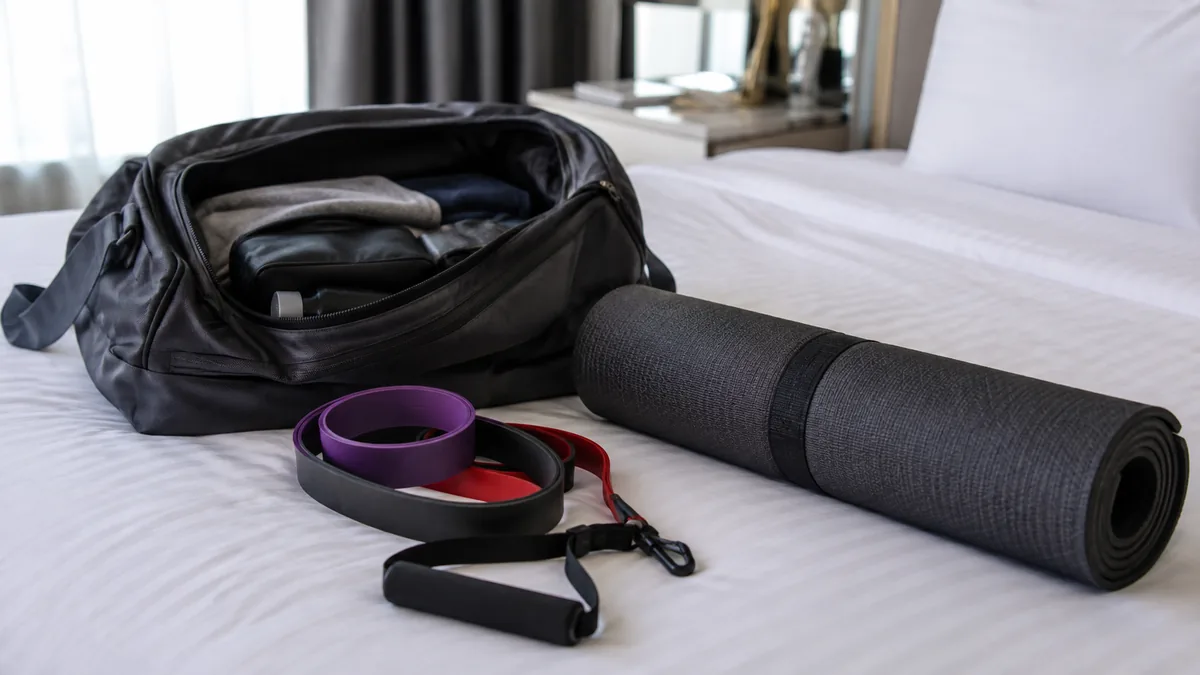
Make it portable. If your days move, your gym has to move with you. Resistance bands fit in a bag and turn a hotel room, an office, or a park into a workout — no excuses left about "not being near the gym."
The One Rule That Holds It Together
Never miss twice. One skipped day is life. Two in a row is a habit forming in the wrong direction. On unpredictable schedules this rule matters more, not less — because you'll miss single days constantly, and that's fine. The entire system is built to make missing one day survivable. Just never let it become two.
What to Stop Doing
Stop planning the perfect week on Sunday. It's a fantasy that shatters by Tuesday and takes your motivation with it. Plan the next 24 hours instead: "tomorrow, after X, I'll do a tier-2 session." That you can actually control.
Frequently Asked Questions
How do I stay consistent with exercise when my schedule changes every week? Stop scheduling by clock time and attach the workout to an event that moves with your day: after you drop the kids, before your first meeting, the moment you get home. A 6 PM plan dies the moment 6 PM gets hijacked. An event anchor survives, because the trigger travels with you.
What should I do on days I have almost no time? Drop a tier instead of skipping. Keep a menu of three workout lengths ready in advance: 10 minutes on a chaos day, 20 on a normal one, 40 on a good one. One round of squats, push-ups and a plank on the living room floor keeps the streak alive, and the streak is the whole game.
Is a 10-minute workout actually worth doing? Yes, mostly for a reason that has nothing to do with calories. Ten minutes protects the identity of someone who trains, which is what carries you to the next session. The alternative is a skipped day, and skipped days are how the habit unravels.
What does the never miss twice rule mean? One missed day is life. Two in a row is a habit forming in the wrong direction. On an unpredictable schedule you will miss single days constantly and that is fine, because the whole system is built to make one missed day survivable. The rule is simply not to let it become two.
Should I plan my whole workout week in advance? Not if your week is genuinely unpredictable. A perfect Sunday plan tends to shatter by Tuesday and take your motivation with it. Planning the next 24 hours instead, as in tomorrow after X I will do a tier-2 session, is the part you can actually control.
Final Thoughts
You don't need a stable schedule to be consistent — you need a system that expects instability. Anchor to events, keep a 3-tier menu, stay portable, and never miss twice. Do that, and the messiest calendar in the world stops being an excuse and starts being just the terrain you train on.
When you're too drained to decide — Read: How Do I Build a Consistent Workout Habit When I'm Always Tired After Work?
The 20-minute session for "normal" days — Read: What Is the Most Effective 20-Minute Workout for Busy Adults Over 30?
Coming back after chaos won — Read: How Do I Get Back Into Exercise After a Long Break?
(Affiliate links below — I only recommend products I genuinely believe in. Purchasing through these links supports this blog at no extra cost to you.)
Gear that moves with your schedule: