How Do I Sleep Well When I Share a Bed? (Partners, Kids, and Pets)
Doing everything right but still waking up tired? The problem might be sharing your bed. Practical fixes for partners, kids, and pets — no separate rooms needed.
As an Amazon Associate I earn from qualifying purchases.
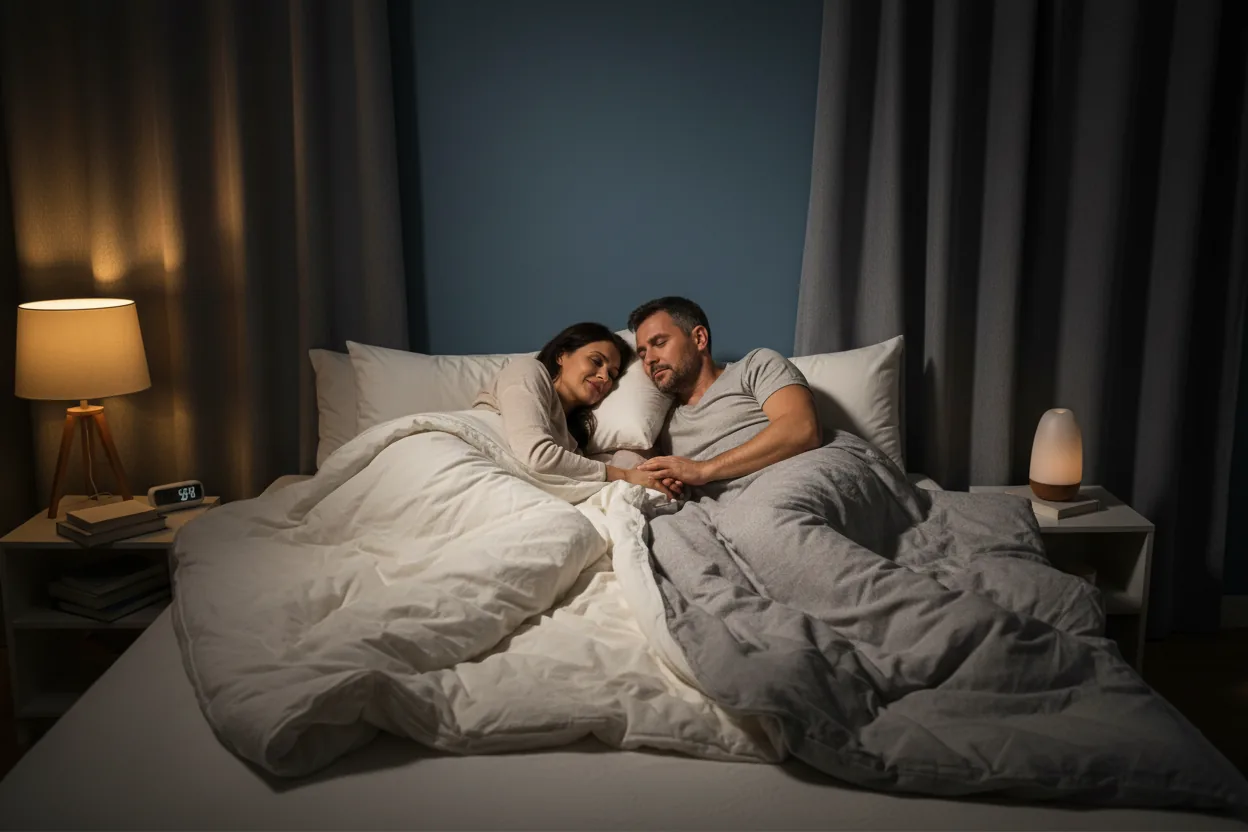
You can do everything right — consistent bedtime, cool room, no screens — and still wake up exhausted because someone else is in the bed. A partner who steals the blanket, a kid who migrates in at 3 AM, a dog that claims the middle. Shared-bed sleep is one of the most common and least-discussed reasons busy adults wake up tired, and most of it is fixable without anyone moving out.
Quick Answer
Most shared-bed sleep problems come down to three things: movement (getting jostled awake), temperature (one person runs hot, the other cold), and territory (someone slowly takes over the bed). The fixes are practical, not dramatic — a bigger or better mattress, separate blankets, earplugs, and clear "bed rules" for kids and pets. You rarely need separate bedrooms; you need to stop competing for the same square meter of mattress.
Movement: The Silent Sleep Thief
Every time your partner rolls over, shifts, or gets up, a motion wave travels across the mattress and pulls you out of deep sleep — often without you fully waking, so you never connect it to your tiredness. This is the single biggest shared-bed problem, and it's the most solvable.
A memory foam or hybrid mattress absorbs motion far better than an old spring one; if partner movement wakes you regularly, this is the upgrade with the biggest payoff. Short of a new mattress, a mattress topper helps dampen some of the transfer. And if your partner's movement or snoring is the issue, a good set of soft earplugs can be genuinely life-changing for the amount they cost.
Temperature: The Blanket War
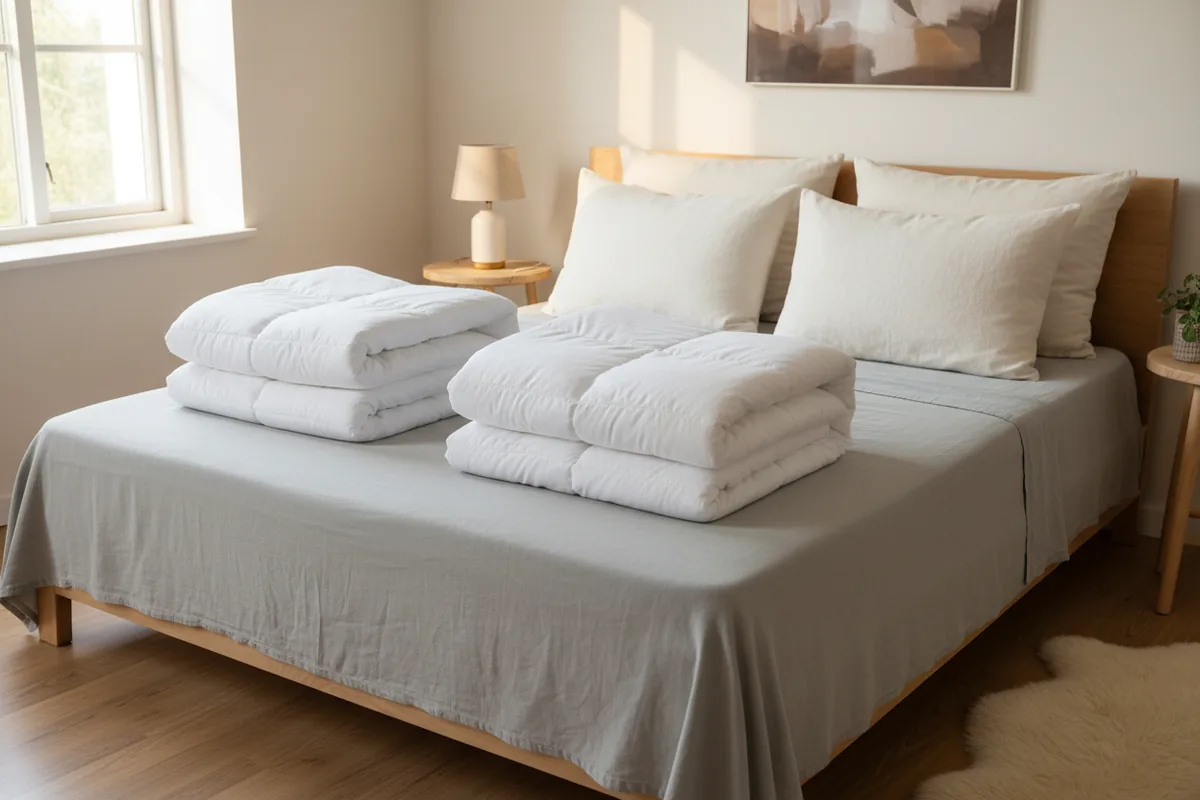
The most common bedroom argument isn't really an argument — it's biology. Two people often need different temperatures for good sleep, and forcing them under one shared blanket guarantees one of you is uncomfortable all night.
The Scandinavian fix solves it instantly: two separate blankets, one bed. Each person gets their own duvet in their own weight, tucks in how they like, and the 3 AM tug-of-war ends. It sounds trivial; it's one of the highest-impact changes couples make to their sleep. For deeper temperature mismatches, breathable bedding or a cooling layer helps the person who "sleeps hot."
Kids in the Bed: Loving but Ruinous
A kid migrating into your bed at 3 AM is sweet and completely destroys adult sleep — small bodies move constantly and radiate heat. The goal isn't to be cold about it, it's to protect everyone's sleep:
Set a gentle, consistent rule (a "you can come in after the sun clock turns yellow" approach works well with a toddler clock). Walk them calmly back most nights — consistency teaches faster than any single dramatic night. And make their own bed genuinely appealing so it's not a punishment to be there. It takes a couple of firm weeks; it pays back for years.
Pets: The Bed-Sized Dog Problem
Pets disrupt sleep more than owners admit — they move, they're warm, and a surprising number of small dogs occupy a shocking amount of bed. If your sleep matters, a comfortable pet bed beside your bed (not in it) keeps them close without the cost. If you won't give up the cuddle, at least establish a "foot of the bed only" boundary so you're not sleeping around them.
What If My Partner Snores?
Snoring is the most common reason one person in a bed sleeps badly, and it is the hardest to fix politely, because the person causing it is asleep and genuinely has no idea.
Start with the cheap things, because they work more often than people expect. Side sleeping reduces snoring for most people, since lying on your back lets the tongue fall back and narrow the airway — a body pillow that makes rolling onto the back uncomfortable does more than nagging ever will. Alcohol in the evening relaxes the airway muscles and reliably makes snoring worse, so a snore that shows up only after a drink is a snore with an obvious lever. Blocked nasal breathing from allergies or a dry room does the same thing, and a humidifier or clearing the nose before bed is a five-minute experiment.
For the listening partner, soft foam earplugs cost almost nothing and are the single highest-return item in this entire article. A white noise machine works differently and sometimes better: it does not block the snore, it narrows the gap between the snore and the background, so the sound stops jolting you awake.
One thing worth taking seriously. If the snoring is loud, happens nearly every night, and comes with pauses in breathing, gasping, or a partner who is exhausted despite a full night in bed, that is the pattern of sleep apnea — and no pillow or earplug addresses it. It is common, it is very treatable, and it carries real cardiovascular risk when it is left alone. That one belongs with a doctor, not with a product.
What About Different Bedtimes?
A surprising amount of shared-bed misery is not about the bed at all. It is that one of you goes to sleep at ten and the other at one, and the later arrival wakes the earlier one up every single night.
You do not need matching schedules. You need the arrival to be quiet. That means laying out clothes and charging cables before the earlier person falls asleep, so the late entry involves no drawers and no searching; using a small warm reading light rather than the ceiling light; and keeping the phone out of the bed entirely, because a screen at 1 AM is bright enough to pull someone out of light sleep even through closed eyelids. A sleep mask solves the light half of this completely and costs less than one bad night is worth.
The same applies in reverse to early risers. An alarm that goes off at 5:30 wakes two people and only one of them needed it. A vibrating alarm, or a phone on the far side of the room set to the quietest tone that still works, keeps the cost to one.
Does Bed Size Actually Matter?
More than most people want to hear, because it is the expensive answer.
Two adults on a queen each get about 76cm of width — roughly the width of a crib mattress per person. That is enough to lie still in and not much more, which is why ordinary movement becomes someone else's problem. A king gives each person around 97cm, and for couples where one partner is restless, that extra space does more than any accessory in this article.
If replacing the bed is not happening, the order of value is clear: a mattress that absorbs motion comes first, because motion transfer is the problem a bigger bed is really solving. A memory foam or hybrid mattress isolates movement far better than an old spring one, and a mattress topper dampens some of it for a fraction of the price. Only after that do earplugs and masks earn their place.
Is Sleeping in Separate Beds a Bad Sign?
No, and the honest answer deserves more than the dismissive one.
Most shared-bed problems really are solvable without it — separate blankets, a motion-absorbing mattress, earplugs, clear rules for kids and pets. Those should come first, because they are cheap and they keep something people value. But there are situations where they are not enough: untreated snoring that will not be dealt with, schedules that are genuinely opposite, a medical condition that disrupts the night, or a new baby in a phase that is going to last months.
In those cases, couples who sleep separately often report the relationship getting better rather than worse, for the obvious reason that chronic sleep deprivation makes people short-tempered and resentful, and resentment is corrosive in a way that a second bedroom is not. Closeness is not measured in centimeters of mattress. If the choice is between sleeping apart and two people who are exhausted and irritable every day, the arithmetic is not close.
What matters is that it be a decision you make together and out loud, rather than something one person starts doing on the sofa without discussion. The sleep is the easy part; the conversation is the part worth getting right.
Frequently Asked Questions
Why do I sleep worse when I share a bed? Usually one of three things: movement, temperature, or territory. Every time the other person rolls over, a motion wave crosses the mattress and pulls you out of deep sleep, often without waking you fully, which is why you never connect it to feeling tired.
Do couples sleep better with separate blankets? Very often, yes. Two people frequently need different temperatures to sleep well, and one shared blanket guarantees one of you is uncomfortable all night. Two separate duvets on one bed ends the 3 AM tug-of-war, and it is one of the highest-impact changes couples make.
How do I stop my child from climbing into my bed at night? Set one gentle rule and keep it consistent. A toddler clock that changes colour in the morning gives a young child something concrete to follow, walking them calmly back most nights teaches faster than any single dramatic night, and making their own bed genuinely appealing stops it feeling like a punishment. Expect a couple of firm weeks.
Should pets sleep in the bed? If your sleep matters, no. Pets move through the night, they radiate heat, and a surprisingly small dog can occupy a surprising amount of mattress. A comfortable pet bed beside yours keeps them close without the cost. If you will not give that up, a foot-of-the-bed-only boundary is the compromise.
Do we need separate bedrooms to sleep well? Rarely. Separate blankets, a mattress that absorbs motion, earplugs and clear rules for kids and pets solve the large majority of shared-bed problems. The issue is usually that one square meter of mattress is being asked to do a job it was never designed for, not that you need different rooms.
How can I sleep when my partner snores? Earplugs or a white noise machine for you, and for them: sleeping on the side rather than the back, skipping alcohol in the evening, and clearing blocked nasal breathing. Those four cover most ordinary snoring. If it is loud and nightly and comes with pauses in breathing or gasping, that is a pattern worth seeing a doctor about rather than working around.
What size bed do two adults actually need? A queen gives each person about 76cm of width, which is roughly a crib mattress each — enough to lie still in and not much more. A king gives about 97cm each and is the single biggest upgrade for couples where one partner moves a lot. If a new bed is not realistic, a motion-absorbing mattress or topper buys back most of the same benefit.
How do we handle completely different bedtimes? Stop trying to match the schedules and make the later arrival silent instead. Clothes and chargers laid out in advance, a small warm reading light rather than the ceiling light, no phone in the bed. A sleep mask handles the light half outright, and earplugs the rest.
Is it bad for a relationship to sleep in separate beds? There is no evidence that it is, and couples who do it often report things improving — chronic sleep deprivation makes people irritable and resentful in a way a second bedroom does not. Try the cheaper fixes first, because they usually work. But if they do not, sleeping apart is a practical decision, not a verdict on the relationship. Just make it together rather than drifting into it.
Final Thoughts
Sharing a bed shouldn't mean sacrificing your sleep. Separate blankets, a motion-absorbing mattress, earplugs, and clear rules for kids and pets solve the vast majority of it — no separate bedrooms required. Good sleep and closeness aren't opposites; you just have to stop making one square meter of mattress do a job it was never designed for.
Fix the rest of your sleep too — Read: How to Improve Sleep Quality for Busy Adults Over 30
Still tired after a full night? — Read: Why Am I Always Tired Even After 7-8 Hours of Sleep?
When summer heat piles on — Read: Why Do I Wake Up Tired Even in Summer?
(Affiliate links below — I only recommend products I genuinely believe in. Purchasing through these links supports this blog at no extra cost to you.)
Tools for better shared-bed sleep: