Do I Need Protein Powder, or Is Real Food Enough?
Do you actually need protein powder, or is real food enough? The honest answer for adults over 30 — when a shake helps, when it's just marketing.
As an Amazon Associate I earn from qualifying purchases.
Walk into any gym conversation and protein powder sounds mandatory — like you're leaving results on the table without a shaker in hand. The honest answer is less exciting and more useful: for most people, real food covers it. Protein powder isn't magic. It's convenience. And whether you need that convenience depends entirely on your day, not on the marketing.
Quick Answer
You need roughly 1.6-2.2g of protein per kg of body weight to build and maintain muscle after 30. If you hit that with food — great, powder adds nothing. Protein powder is worth it only when real food is inconvenient: busy mornings, post-workout, or when you're consistently falling short of your target. It's a tool for closing a gap, not a requirement.
What Protein Powder Actually Is (and Isn't)
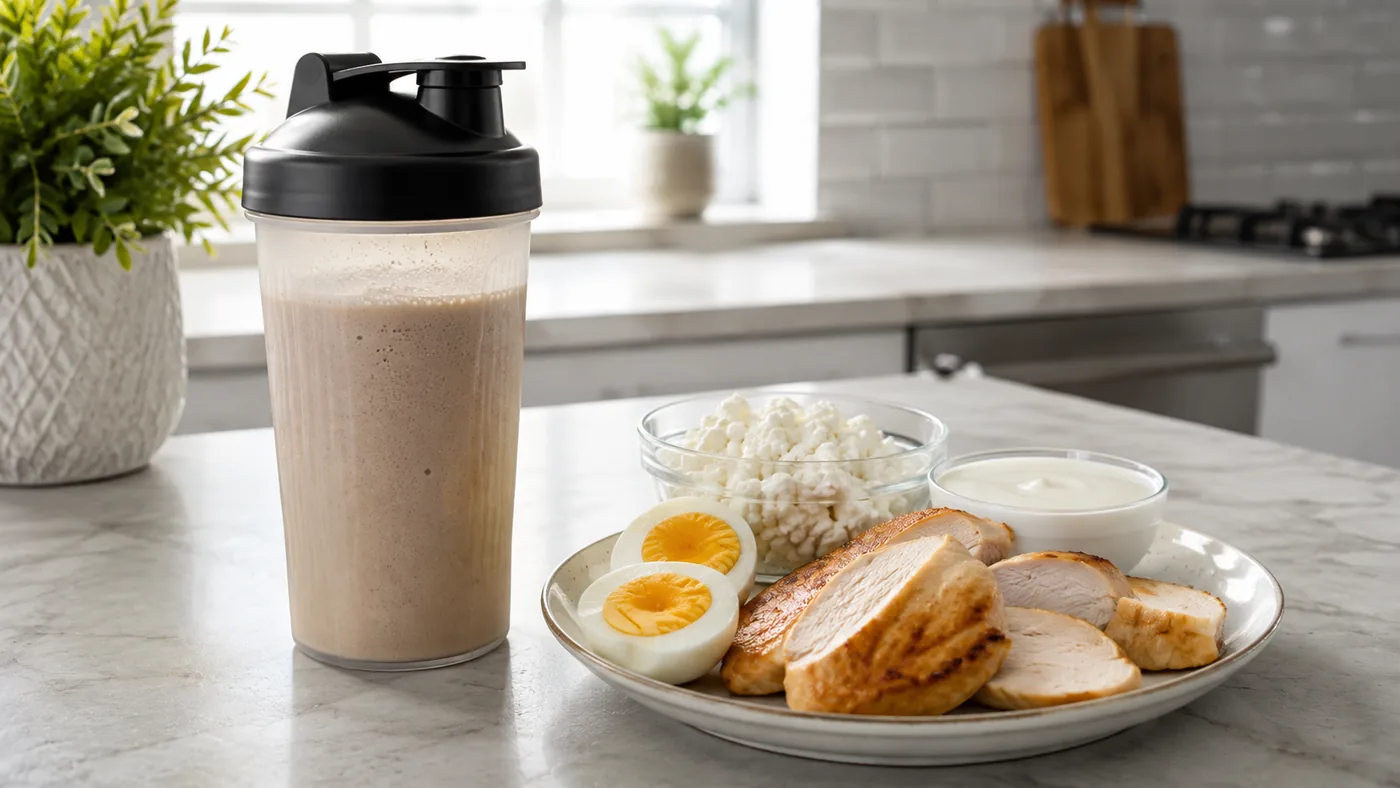
Protein powder is just concentrated, dehydrated protein — usually from milk (whey/casein) or plants (pea, soy, rice). It's not a steroid, not a shortcut, and not more "anabolic" than chicken. A scoop of whey and a chicken breast do the same job in your body; one just fits in a gym bag and mixes in 30 seconds. That's the entire advantage: convenience and speed, nothing more.
When Real Food Is Genuinely Enough
If your meals already include a palm-sized portion of protein — eggs, Greek yogurt, cottage cheese, chicken, fish, tofu, lentils, beans — across the day, you're likely hitting your target without thinking about it. Real food also brings things powder doesn't: fiber, micronutrients, and the fullness that keeps you from snacking. For a lot of adults, "just eat more protein at each meal" solves the whole problem, no supplements involved.
When Protein Powder Earns Its Place

Busy mornings. If breakfast is realistically coffee-and-run, a 30-second shake with a scoop of whey protein beats skipping protein until noon.
Post-workout convenience. Not because of a magic "window," but because a shake is easy when you're sweaty and don't want to cook.
Genuinely falling short. If you track for a few days and you're consistently 30-40g under target, powder is the easiest fix. A plant-based option works just as well if you avoid dairy.
High needs, small appetite. Older adults or anyone struggling to eat enough whole-food protein — a shake adds 25g without a full meal.
How to Choose One (If You Get One)
Keep it simple: whey isolate or concentrate for most people, pea or soy if plant-based. Look for ~20-25g protein per serving, a short ingredient list, and skip the ones loaded with fillers and "proprietary blends." Fancy is not better here — a basic quality powder does everything the $60 tub does.
Common questions about protein powder
Do you need protein powder to build muscle? No. Muscle responds to total daily protein and to training that gets progressively harder — it does not care whether the protein arrived as chicken or as a scoop. Powder is a convenience product, not a growth product. The people it genuinely helps are those who keep missing their daily target, and the reason it helps them is that drinking 25 grams is easier than cooking it.
How much protein do you actually need per day? For a healthy adult doing resistance training, roughly 1.6 grams per kilogram of bodyweight per day covers it, with little added benefit above about 2.2. For an 80kg person that is around 130 grams. Spread it across the day rather than back-loading it into dinner — three or four meals with 25 to 40 grams each is easier to hit and easier to digest than one enormous one.
Is protein powder bad for you? Not for people with healthy kidneys, despite how persistent that claim is. The genuine things worth knowing are more mundane: some people digest whey concentrate badly and do better on isolate or a plant blend, and the supplement industry is loosely regulated, so third-party testing is worth looking for. It is food in powder form, with the same upsides and no special risks.
What is the cheapest way to hit a protein target without powder? Eggs, tinned fish, dried lentils and beans, milk and plain yogurt, and whichever meat is on offer — roughly in that order of protein per unit of money. Cottage cheese and skyr are the two that surprise people most. A kilo of dried red lentils costs less than one serving of most powders and carries close to 250 grams of protein.
Is it better to have protein from food or a shake after a workout? It makes very little difference, and the post-workout window is far wider than it was once sold as — hours, not minutes. Have whichever you will actually have. A shake wins when your next real meal is a long way off or you have no appetite after training; food wins on satiety, cost and everything else that comes with it.
Final Thoughts
Protein powder is a convenience tool, not a health requirement. Figure out your daily target, try to hit it with food first, and reach for a shake only where real food genuinely doesn't fit your day. Anyone telling you that you need it is usually selling it. Your muscles can't tell the difference between a scoop and a chicken breast — only your schedule can.
Where supplements fit overall — Read: What Are the Most Essential Supplements for Busy Adults?
Don't waste money on the wrong bottles — Read: How to Choose the Right Supplements Without Wasting Money
Get protein from breakfast first — Read: What Are the Best High-Protein Breakfasts for Busy Mornings?
(Affiliate links below — I only recommend products I genuinely believe in. Purchasing through these links supports this blog at no extra cost to you.)
If you decide a shake fits your day: