How Do I Choose the Right Supplements Without Wasting Money?
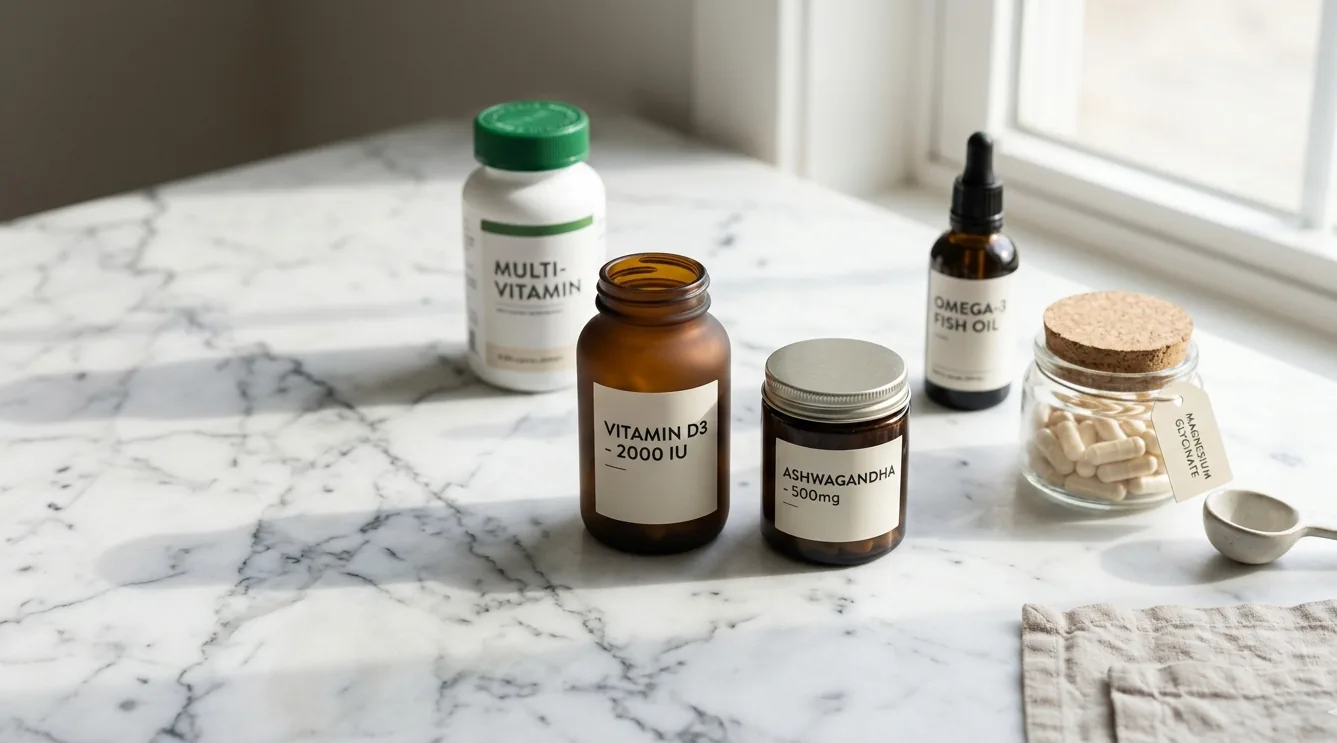
Start with the supplements that address the most common deficiencies in adults over 30: vitamin D, magnesium, and omega-3s. Add a quality multivitamin as insurance. Everything else — creatine, nootropics, specialized formulas — comes after the foundation is covered. Never buy a supplement without ch
As an Amazon Associate I earn from qualifying purchases.
The supplement industry is a $50 billion market built largely on confusion. Flashy labels, celebrity endorsements, and impossible promises make it genuinely hard to know what's worth buying and what's an expensive waste of money.
If you're wondering how to choose the right supplements without wasting money on unnecessary products, the answer starts with understanding what your body actually needs — not what the marketing says you need.
This guide cuts through the noise with a practical framework for building a supplement routine that's evidence-based, cost-effective, and tailored to busy adults over 30.
Quick Answer
Start with the supplements that address the most common deficiencies in adults over 30: vitamin D, magnesium, and omega-3s. Add a quality multivitamin as insurance. Everything else — creatine, nootropics, specialized formulas — comes after the foundation is covered. Never buy a supplement without checking the evidence first.
Why Most People Waste Money on Supplements
There are three main reasons people spend money on supplements they don't need:
- Marketing over evidence— flashy claims, celebrity endorsements, and "proprietary blends" that hide actual ingredient doses
- Skipping the basics— spending money on advanced supplements before fixing common deficiencies that are silently affecting energy and health
- Buying poor quality— cheap versions of effective supplements often use forms with poor absorption, making them effectively useless
The framework below fixes all three.
How to Choose the Right Supplements Without Wasting Money
Step 1: Fix Deficiencies First
Before buying any specialized supplement, address the three deficiencies that affect the vast majority of adults over 30:
Vitamin D— Office workers, people in northern climates, and anyone who spends most of their day indoors is almost certainly deficient. Vitamin D affects mood, energy, immune function, testosterone, and sleep hormone regulation. It's one of the highest-impact supplements available for the lowest cost.
Vitamin D3 125 mcg is a clean, well-dosed option. Take it with a meal containing fat for optimal absorption. Most people notice mood and energy improvements within 2–3 weeks of correcting a deficiency.
Magnesium— Involved in over 300 enzymatic reactions, magnesium affects energy production, sleep quality, stress resilience, and muscle function. Most adults are deficient because modern diets are low in magnesium-rich foods and stress depletes it rapidly.
Magnesium Glycinate is one of the best-absorbed forms — gentler on digestion than oxide or citrate, with strong evidence for sleep and anxiety support. This is the form to choose if sleep or stress is your primary concern.
Omega-3s— Most adults consume far more omega-6 (from processed foods) than omega-3, creating an inflammatory imbalance that affects cardiovascular health, brain function, joint health, and sleep quality. A quality omega-3 supplement corrects this ratio.
Wild-Caught Norwegian Arctic Cod Liver Oil provides omega-3s plus naturally occurring vitamins A and D — a complete solution in one supplement. Wild-caught is important for purity and EPA/DHA content.
Step 2: Add a Quality Multivitamin as Insurance
Even with a good diet, it's difficult to consistently hit optimal levels of every micronutrient. A quality multivitamin fills the gaps without requiring you to track every nutrient individually.
The key word is quality. Most cheap multivitamins use poorly absorbed forms of minerals and synthetic vitamins that your body can't use efficiently.
NaturesPlus Source of Life GOLD Multivitamin uses whole food-based nutrients rather than synthetic isolates — significantly better absorbed and utilized by the body. It's more expensive than a generic multivitamin, but the difference in bioavailability makes it worth the premium.
Step 3: Add Performance Supplements if Needed
Once your deficiencies are covered, you can consider supplements with specific performance benefits:
Creatine— One of the most researched supplements available, with strong evidence for both physical performance and cognitive function. Particularly valuable for adults over 30 who are experiencing natural declines in strength and mental sharpness.
Creatine Monohydrate Capsules— the most studied form, no loading required, 3–5g daily. Inexpensive, effective, and safe for long-term use. One of the best value-for-money supplements available.
Step 4: Evaluate Everything Else Critically
For any supplement beyond the foundation above, ask these questions before buying:
- Is there human clinical trial evidence — not just animal studies or testimonials?
- Is the dose in the product the same dose used in the studies?
- Is it third-party tested for purity and label accuracy?
- Does the company disclose the exact amount of each ingredient (no proprietary blends)?
If the answer to any of these is no — pass. The supplement market is full of products that sound impressive but have no meaningful evidence behind them.
How to Identify Quality Supplements
Look for these markers of quality:
- Third-party testing— NSF, Informed Sport, or USP certification
- Transparent labeling— every ingredient and dose listed clearly
- Bioavailable forms— magnesium glycinate (not oxide), D3 (not D2), methylfolate (not folic acid)
- No proprietary blends— if a label says "proprietary blend 500mg" with 10 ingredients, you have no idea what dose you're getting of anything
-
Reasonable claims— if a supplement promises to "burn fat while you sleep" or "triple your testosterone," it's marketing, not science

Recommended Products
| Product | Why It Helps | Link |
|---|---|---|
| Vitamin D3 | Corrects the most common deficiency — mood, energy, immunity, sleep | View on Amazon |
| Magnesium Glycinate | Best-absorbed magnesium form — sleep, stress, and muscle recovery | View on Amazon |
| Wild-Caught Cod Liver Oil | Omega-3s + vitamins A & D — reduces inflammation, supports brain health | View on Amazon |
| NaturesPlus Gold Multivitamin | Whole food-based nutrients — fills dietary gaps with superior absorption | View on Amazon |
| Creatine Monohydrate | Cognitive and physical performance — most evidence-backed supplement available | View on Amazon |
Disclosure: We may earn a small commission if you purchase through our links, at no extra cost to you. We only recommend products we'd genuinely use ourselves.
Common Supplement Mistakes to Avoid
- Buying the cheapest version— quality varies enormously; cheap magnesium oxide has ~4% absorption vs 80%+ for glycinate
- Taking too many things at once— you can't evaluate what's working if you add five supplements simultaneously
- Ignoring the fundamentals— no supplement compensates for poor sleep, chronic stress, or a diet of processed food
- Trusting marketing over evidence— "clinically studied" often means one small study funded by the manufacturer; look for independent replication
- Stopping too soon— most supplements require 4–8 weeks of consistent use to show meaningful effects; give them time before judging
FAQ
Q: How do I know if I'm actually deficient in something?
Blood testing is the most accurate method. Ask your doctor for a panel that includes vitamin D (25-hydroxyvitamin D), magnesium (RBC magnesium, not serum), and B12. Many deficiencies don't show symptoms until they're quite severe.
Q: Are expensive supplements always better?
Not always — but cheap supplements are often worse. The key is bioavailable forms and third-party testing, which add cost. Creatine monohydrate is inexpensive and highly effective. A cheap multivitamin with poorly absorbed forms is expensive in a different way — you're paying for something that doesn't work.
Q: Can I take all these supplements together?
Yes — these supplements work through different mechanisms and are safe to combine. Start one at a time so you can identify the effect of each before adding the next.
Q: Do I need supplements if I eat a healthy diet?
For most adults over 30 — yes, for vitamin D and omega-3s specifically. Modern food systems, indoor lifestyles, and soil depletion make it genuinely difficult to achieve optimal levels through diet alone, even with a very good diet.
Q: How long should I take supplements before deciding if they work?
Give each supplement 4–8 weeks of consistent use before evaluating. Some effects (energy, mood) appear within 2–3 weeks; others (joint health, long-term cardiovascular protection) take months to become apparent.
Final Tip
Learning how to choose the right supplements without wasting money on unnecessary products comes down to one principle: evidence over marketing.
Start with vitamin D and magnesium glycinate this week. Two supplements, both inexpensive, both backed by substantial evidence, both addressing deficiencies that affect the majority of adults over 30. Give it four weeks. See how you feel. Then build from there.
That's one small daily move — exactly the kind that adds up to a big lifetime gain.
Want more practical health habits for busy adults? Browse our guides at EverydayFitHabits.com — built for people who don't have time to waste.