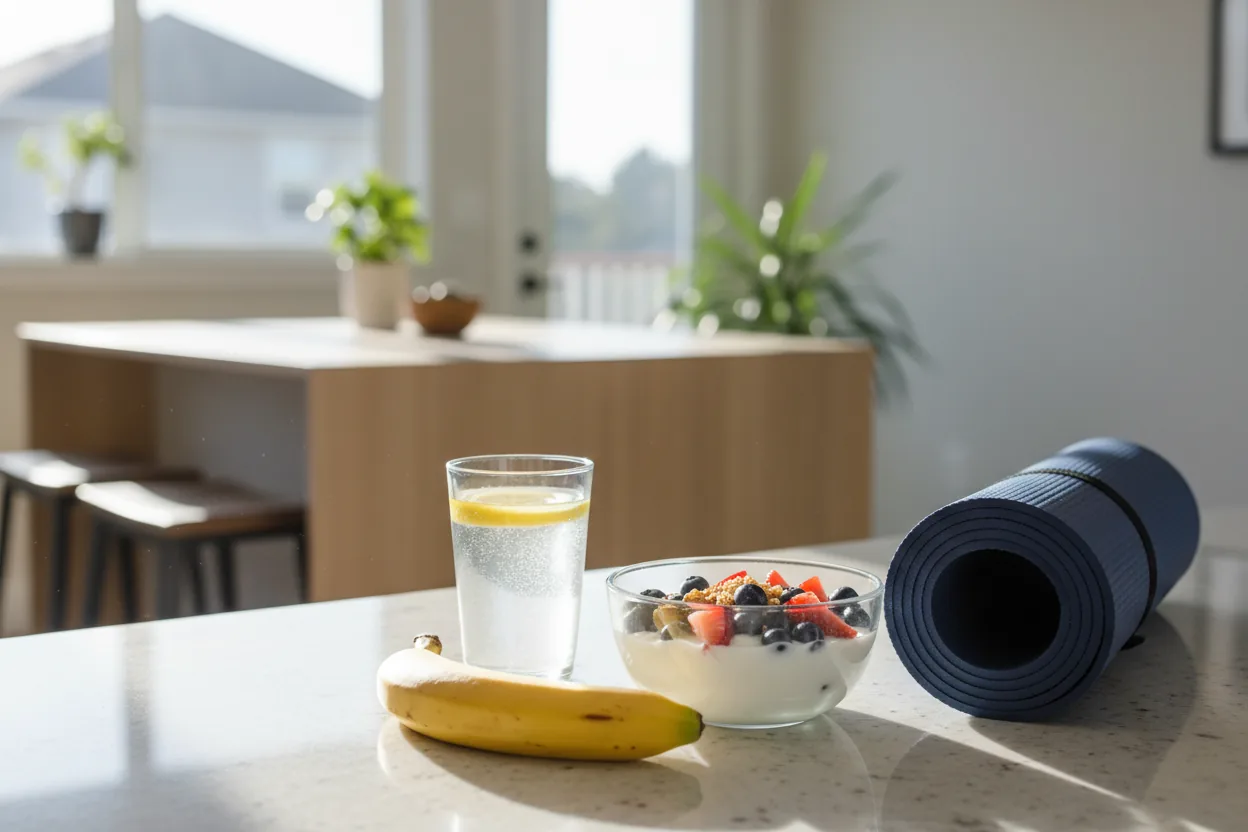
How Do I Stop Snacking at Night? (Why It Happens and What Actually Works)
It's 9:30 PM and you're in front of the fridge again. Why night snacking happens (it's not willpower) and the 2-week reset that actually stops it.
As an Amazon Associate I earn from qualifying purchases.
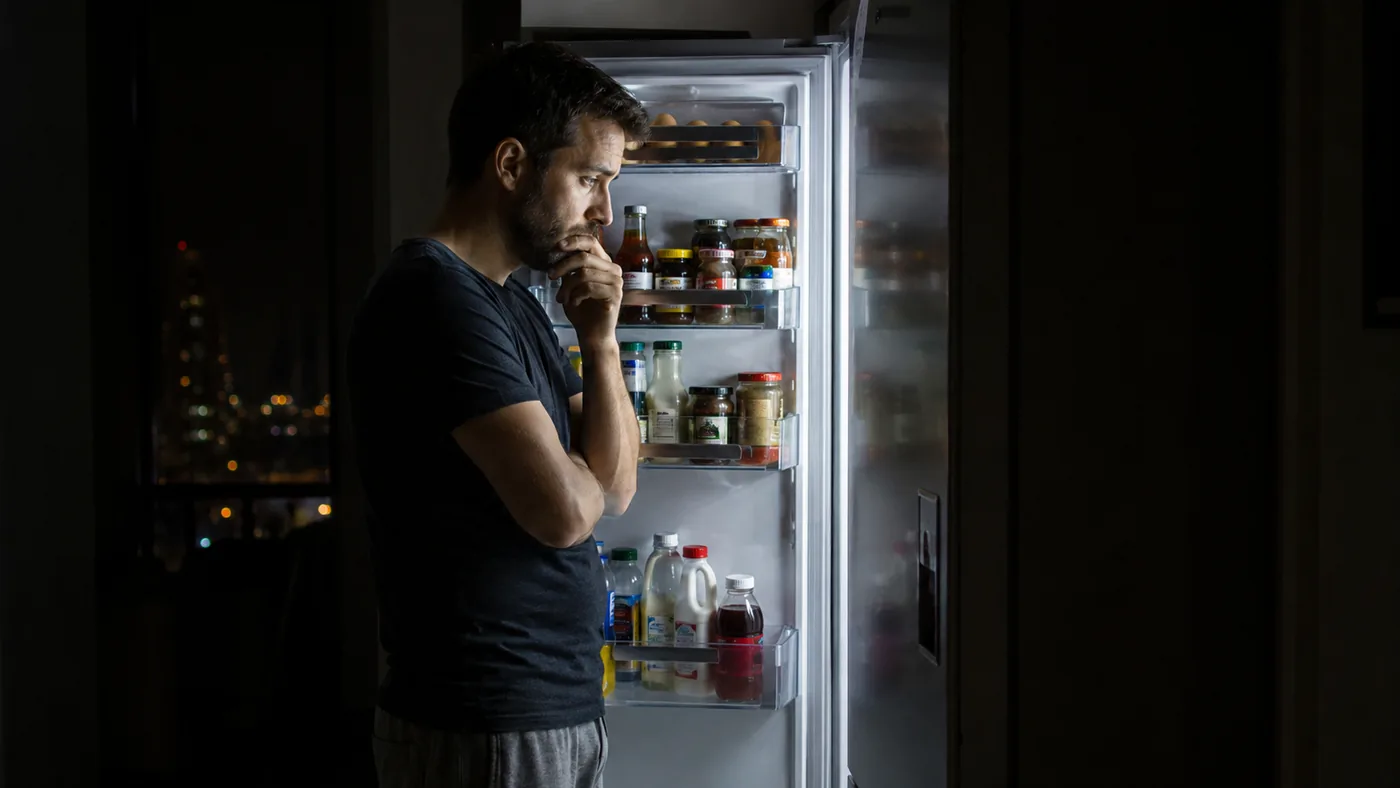
It's 9:30 PM. Dinner was fine, you're not really hungry, and yet you're standing in front of the open fridge for the second time tonight. Night snacking is the most common eating struggle for busy adults — and the least understood. Because it's almost never about hunger, willpower has almost nothing to do with fixing it.
Quick Answer
Night snacking is usually caused by three things: not eating enough protein earlier in the day, unwinding stress with food, and pure habit loops (couch + TV = snack). The fix that works isn't resisting harder at 9:30 PM — it's front-loading protein at breakfast and lunch, closing the kitchen with a small ritual, and breaking the couch-snack autopilot. Most people see a real difference within two weeks.
It is the same pattern whether it shows up as late-night cravings, evening snacking, or eating well past dinner — one problem, and it responds to the same three changes.
Why You Snack at Night (It's Not Weakness)
The daytime debt. Skimpy breakfast, sad desk lunch, and by evening your body is legitimately behind on protein and calories. Nighttime "cravings" are often just delayed hunger collecting its debt — with interest, and usually in cookie form.
The unwind reflex. After a day of work, kids, and noise, food is the fastest-acting relaxation tool in the house. The snack isn't feeding hunger; it's marking the transition to "my time." That's why it's always something comforting, never a chicken breast.
The autopilot loop. Couch, show, hand in bag — repeated enough times, the couch itself becomes the trigger. You're not deciding to snack; the routine is deciding for you.
Figuring out which of the three drives you is half the fix. Most people are a mix of all three.
What Actually Works
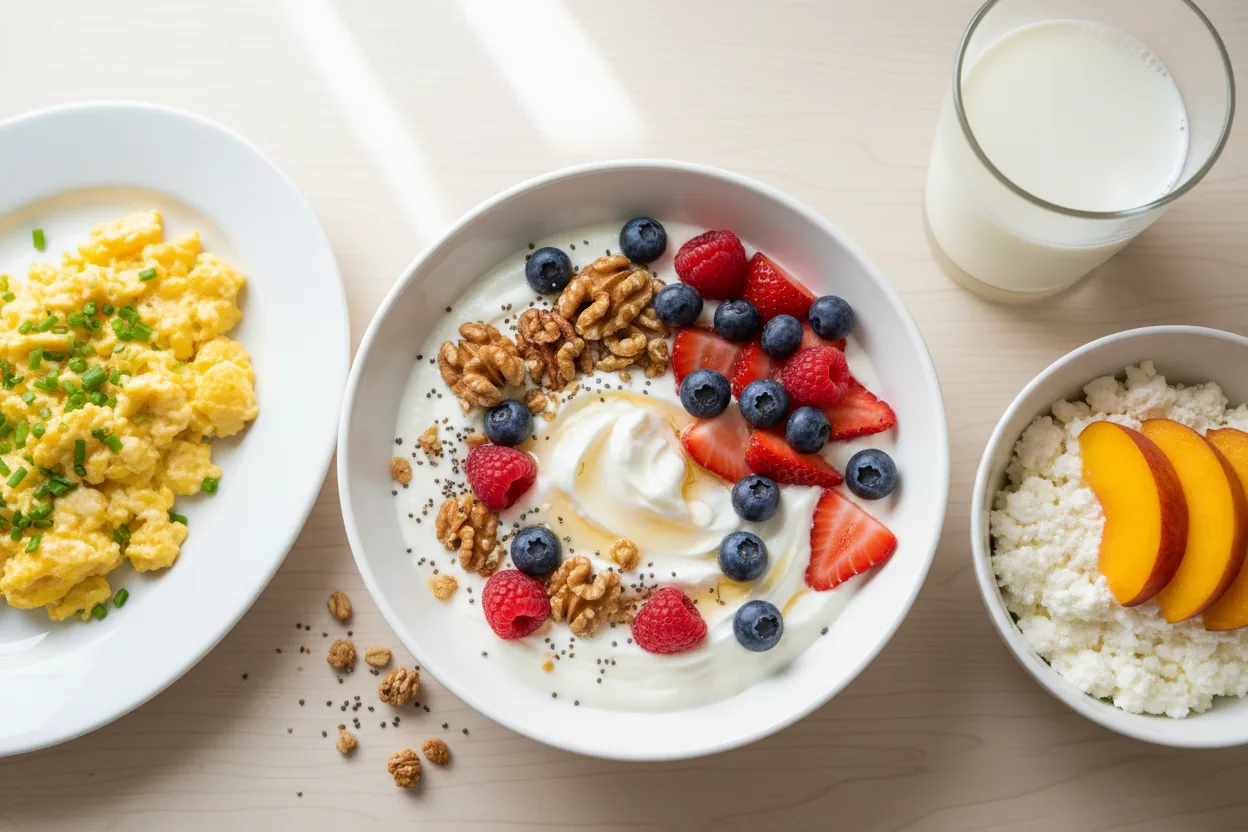
Fix breakfast and lunch first. This is the unsexy answer that beats everything else: 25-30 grams of protein at breakfast and a real lunch cut evening cravings more than any nighttime trick. You can't out-discipline a daytime deficit.
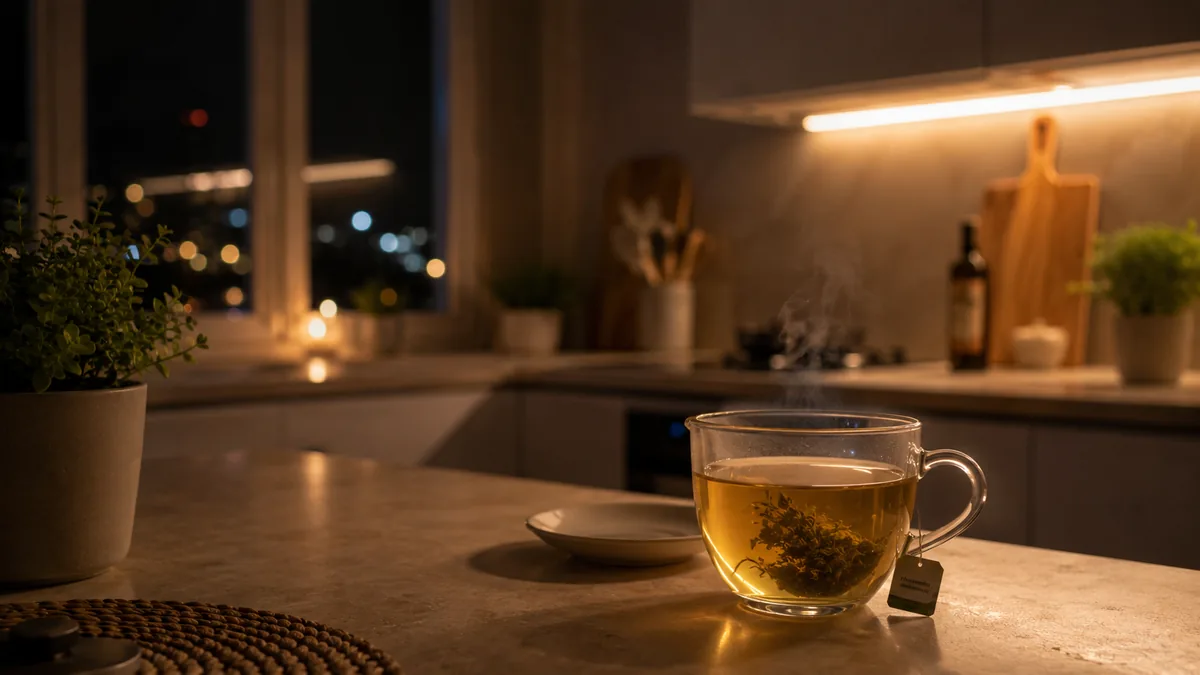
Close the kitchen with a ritual. After dinner cleanup: lights off in the kitchen, a cup of herbal tea, maybe brushing your teeth early. A clear "kitchen is closed" signal gives your brain the transition it was seeking from the snack.
Break the couch loop for two weeks. Change one variable: sit in a different spot, keep your hands busy (a warm drink counts), or take a 10-minute walk after dinner — it settles blood sugar and quiets cravings at the same time.
Make the good choice the lazy choice. Don't stock the trigger foods at eye level. If it's in the house, it should require effort; keep easy alternatives visible instead — a bowl of fruit on the counter, yogurt at the front of the fridge.
If you're genuinely hungry — eat. A real evening hunger deserves real food: Greek yogurt, cottage cheese, a boiled egg, some fruit with nuts. The goal is ending mindless eating, not white-knuckling actual hunger.
Journaling the urge works better than it sounds. One line — time, what you wanted, what was happening — in a simple daily journal turns an invisible autopilot into a visible pattern within a week.
The 2-Week Reset
Days 1-3: just notice and write the one-liner, change nothing. Days 4-7: protein breakfast + kitchen-closed ritual. Week 2: add the 10-minute post-dinner walk and the couch change. That's the whole program — small, boring, and it works.
Common questions about night snacking
How do you stop eating at night when you are not actually hungry? Separate the two cases before doing anything else. If you are genuinely hungry, eat — the problem is a daytime protein shortfall, not a nighttime one. If you are not hungry, the trigger is almost always the couch, the screen or the end of the day rather than your stomach, and what breaks it is changing the situation instead of resisting inside it. Standing up, moving rooms, making tea, or walking for ten minutes ends far more non-hungry eating episodes than willpower does.
How do I stop snacking in the evening after dinner? Give the evening a closing signal. Most after-dinner snacking is your brain looking for a transition into “my time”, and food is simply the fastest marker available. Clean up, turn the kitchen light off, brush your teeth earlier than feels normal, and make a hot drink. That sequence takes four minutes and does the same job the snack was doing.
What actually stops late night cravings? Protein earlier in the day, and a different chair. Late-night cravings are usually two things stacked: a real calorie and protein shortfall carried over from breakfast and lunch, plus a learned loop where one specific spot on the sofa has been paired with eating hundreds of times. Fix the first with 25–30g of protein at breakfast, and break the second by physically sitting somewhere else for two weeks.
How can I prevent late night snacking before it starts? Prevention happens at breakfast, not at 9:30 PM. By the time you are standing at the fridge the decision has largely been made for you hours earlier. The two moves that work in advance are eating enough protein at the first two meals, and making the trigger foods genuinely inconvenient — out of sight, on a high shelf, or not bought at all — while the easy options sit in front of you.
Is eating at night actually bad for you? The clock itself is not the problem. Total intake across the day matters far more than the hour it happened. What makes night eating a problem in practice is that it tends to be unplanned, added on top of the day’s food rather than counted as part of it, and made of things chosen for comfort rather than fullness. A planned bowl of yogurt at 9 PM is not the same event as half a packet of biscuits you do not remember opening.
Why am I only hungry at night? Usually because you were not eating enough earlier and the hunger simply arrived late. Appetite lags intake. Under-eat at breakfast and lunch and the signal does not disappear — it queues, then turns up all at once in the evening when you finally sit down and stop being busy. Being busy suppresses your awareness of hunger; it does not suppress the need.
Final Thoughts
Night snacking isn't a character flaw; it's a system running exactly as designed — wrong inputs in the morning, wrong triggers at night. Change the inputs, redesign the triggers, and 9:30 PM stops being a battle. There's nothing to win at night; the fight was already decided at breakfast.
Start where it actually starts — Read: What Are the Best High-Protein Breakfasts for Busy Mornings?
The workday version of the same problem — Read: How to Stop Stress Eating When You're Overwhelmed at Work
Evening habits that help you sleep too — Read: How to Improve Sleep Quality for Busy Adults Over 30
(Affiliate links below — I only recommend products I genuinely believe in. Purchasing through these links supports this blog at no extra cost to you.)
Small tools that help: