What Should I Eat Before and After a Home Workout?
What to eat before and after a home workout — without the athlete-level supplement myths. Simple, realistic fueling for busy adults training at home.
As an Amazon Associate I earn from qualifying purchases.
You don't need a locker full of supplements to eat right around a workout — especially a 20-minute session in your living room. Most of the pre- and post-workout advice online is written for competitive lifters and completely overkill for busy adults training at home. The real rules are simpler than the supplement industry wants you to believe, and they fit around a normal day.
Quick Answer
Before a home workout: eat a small, carb-focused snack 30-60 minutes ahead if you're hungry (banana, toast, yogurt) — and skip it entirely if you're not, since short home sessions don't require fuel. After: get some protein and carbs within a couple of hours (a normal meal is fine). Forget the mythical "anabolic window" — total daily protein matters far more than precise timing.
Before: Fuel Only If You Need It
For a short-to-moderate home workout, the honest answer is you often don't need to eat anything. If you trained fasted in the morning and felt fine, you're fine.
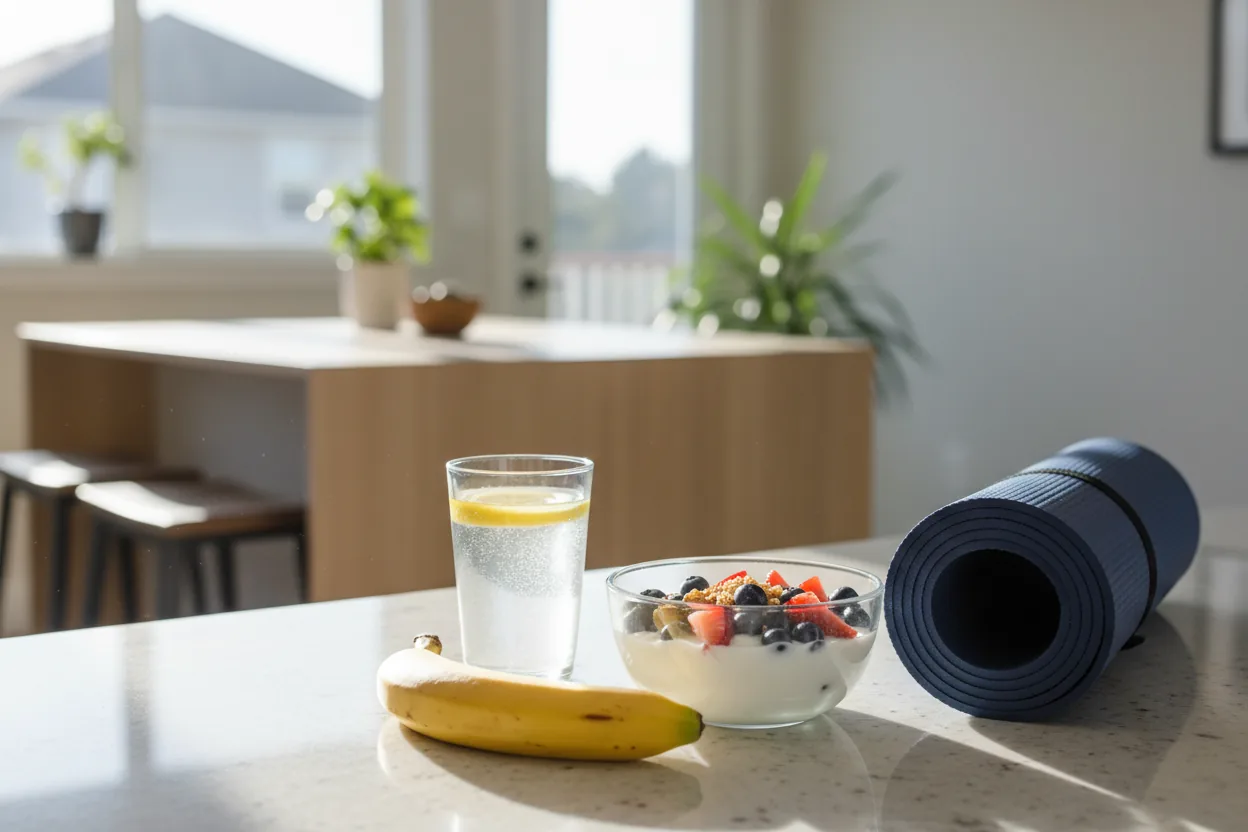
Eat something beforehand only if: you're genuinely hungry, you feel weak or lightheaded during workouts, or the session is longer/harder than usual. If so, keep it small and carb-focused, 30-60 minutes ahead — a banana, a slice of toast with honey, a small bowl of oats, or yogurt with fruit. Carbs are quick, accessible energy; a heavy or high-fat meal too close to training just sits in your stomach and makes you sluggish.
What to avoid pre-workout: a big meal (cramps and reflux), and anything high in fat or fiber right before (slow to digest). Save those for later.
After: The Part That Actually Matters
Post-workout is where nutrition does real work — repair and recovery. But the "you have 30 minutes or it's wasted" panic is a myth for most people. The window is hours, not minutes.
Aim for protein plus carbs within a couple of hours of finishing. That can just be your next normal meal:
- Eggs and toast
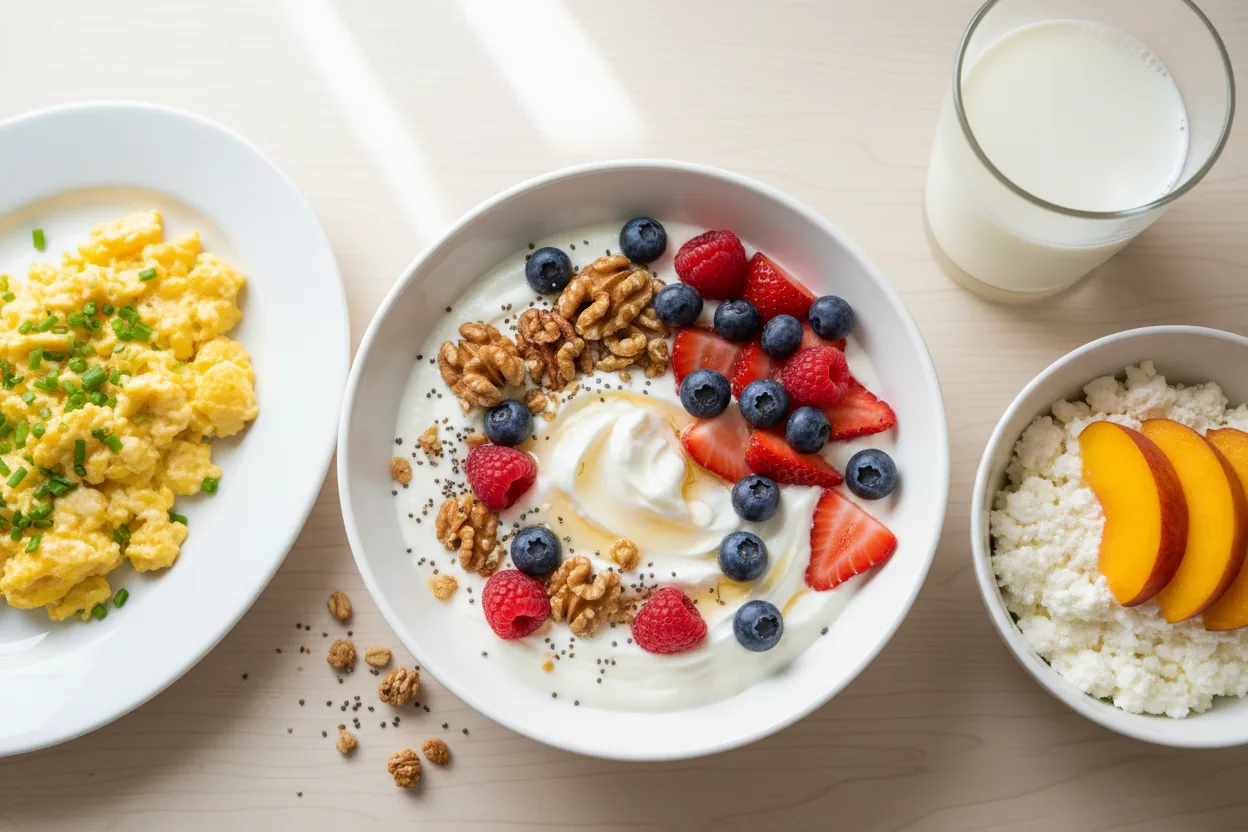
- Greek yogurt with fruit and granola
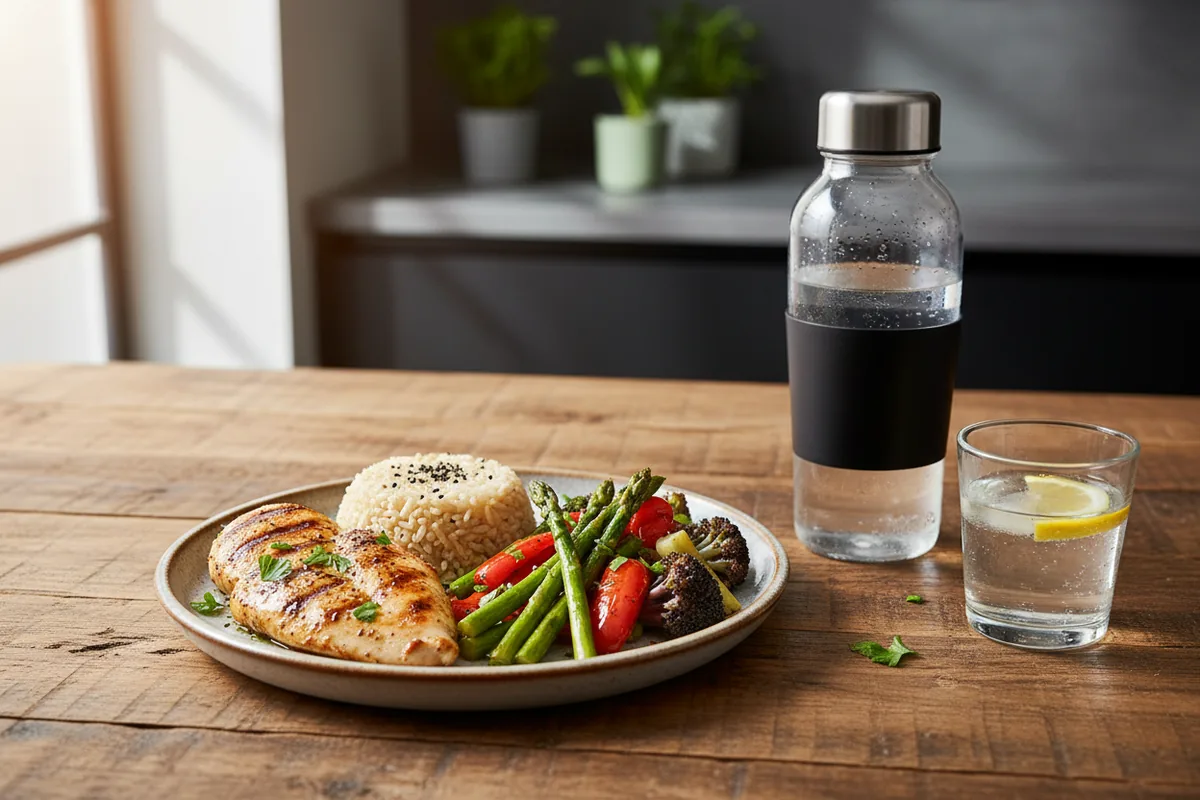
- Chicken or tofu with rice and veg
- A protein shake if a meal isn't convenient — a scoop of whey protein with a banana covers both bases in 60 seconds
The protein rebuilds muscle; the carbs refill energy and help you recover for tomorrow. That's the whole job.
The Timing Myth, Cleared Up
The "anabolic window" — the idea that you must eat protein within 30 minutes or lose your gains — has been largely overturned by research. What actually matters is your total protein across the whole day (roughly 1.6-2.2g per kg for active adults over 30). Hit that, and whether you ate at minute 20 or minute 90 barely registers. This is liberating: you don't have to sprint to the kitchen sweaty. Shower, settle, then eat a proper meal.
Don't Forget Water
The most underrated pre/post-workout nutrient isn't a macro — it's water. Even mild dehydration tanks performance and makes recovery feel worse. Drink through the day, have water nearby during the session, and rehydrate after. Keeping a water bottle in sight is the simplest performance upgrade there is.
Frequently Asked Questions
Should I eat before a home workout? Only if you need to. For a short-to-moderate session at home the honest answer is that you often do not. Eat beforehand if you are genuinely hungry, if you feel weak or lightheaded while training, or if the session is longer than usual, and keep it small and carb-focused 30 to 60 minutes ahead.
What is the best pre-workout snack? Something small and carb-focused: a banana, toast with honey, a small bowl of oats, or yogurt with fruit. Carbs are quick, accessible energy. What to avoid is a big meal, which brings cramps and reflux, and anything high in fat or fiber right before, which digests too slowly.
Do I need to eat protein within 30 minutes after a workout? No. The anabolic window idea has been largely overturned by research. The window is hours, not minutes, so shower, settle and eat a proper meal. Protein and carbs within a couple of hours is all the timing most people need.
What should I eat after a home workout? Protein plus carbs, which can simply be your next normal meal: eggs and toast, Greek yogurt with fruit and granola, or chicken or tofu with rice and vegetables. A shake with a banana covers both in about a minute when a meal is not convenient. Protein rebuilds, carbs refill.
How much protein do I actually need per day? Roughly 1.6 to 2.2 grams per kilogram of bodyweight for active adults over 30. Your daily total is what matters, far more than the exact minute you eat it, which is what makes the timing anxiety unnecessary in the first place.
Final Thoughts
Eating around a home workout isn't complicated: fuel before only if you need it, get protein and carbs sometime after, hit your daily protein total, and stay hydrated. Skip the powders, gels, and timing anxiety built for athletes. For a busy adult training at home, real food and common sense do the entire job.
Nail your daily protein at breakfast — Read: What Are the Best High-Protein Breakfasts for Busy Mornings?
Do you even need the powder? — Read: Do I Need Protein Powder, or Is Real Food Enough?
The workout to fuel — Read: What Is the Most Effective 20-Minute Workout for Busy Adults Over 30?
(Affiliate links below — I only recommend products I genuinely believe in. Purchasing through these links supports this blog at no extra cost to you.)
Simple around-the-workout basics: